
Abuja, Nigeria — The World Bank has expressed concerns over Nigeria’s N54.99 trillion 2025 federal budget, describing it as overly ambitious and warning that the Federal Government may resort to the Central Bank’s Ways and Means facility to bridge likely revenue shortfalls—a move it says could derail fragile macroeconomic gains.
Speaking on Monday during the launch of the Nigeria Development Update (NDU) report titled “Building Momentum for Inclusive Growth”, the Bank’s Lead Economist for Nigeria, Alex Sienaert, said that although revenue collection has improved, key assumptions in the budget remain optimistic and potentially unrealistic.
“It’s a very ambitious budget. Even with the very positive revenue sort of tailwind that we have… it looks like it’s going to be pretty hard to meet some of the ambitious revenue targets,” Sienaert stated.
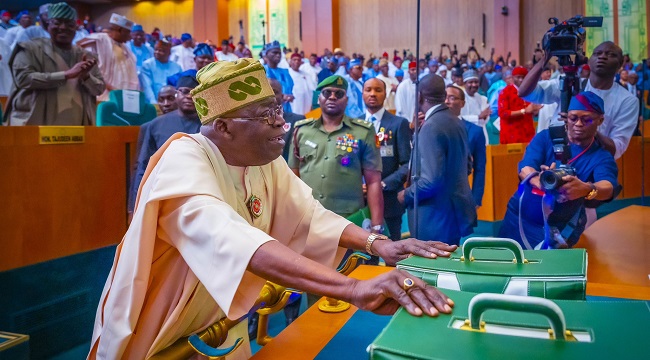
The 2025 budget, signed into law by President Bola Tinubu, is Nigeria’s largest ever and includes N13.64 trillion for recurrent expenditure, N23.96 trillion for capital projects, N14.32 trillion for debt servicing, and N3.65 trillion in statutory transfers. The projected deficit of N13.08 trillion is expected to be financed through domestic and foreign borrowing.
Budget assumptions include a crude oil benchmark of $75 per barrel, daily oil production of 2.06 million barrels, an average exchange rate of ₦1,400/$, and an inflation target of 15%.
However, Sienaert cast doubt on the oil production target, pointing to Nigeria’s current output of approximately 1.6 million barrels per day. He also highlighted uncertainties around revenue from subsidy removal and the proposed windfall tax on foreign exchange gains.
“If revenue targets are not met, financing requirements may exceed what’s budgeted. That could lead to arrears or renewed risks of deficit monetisation via Ways and Means,” he warned, cautioning that any return to CBN overdrafts would undermine confidence in the country’s fiscal and monetary reforms.
While acknowledging fiscal gains from petrol subsidy removal and exchange rate unification, the World Bank urged further reforms—chiefly the elimination of the electricity subsidy, which it labelled “wasteful and regressive.”
The report also flagged concerns over oil revenue transparency and called for a reduction in governance costs. It noted that although the Nigerian National Petroleum Company Limited (NNPCL) began using official rates for fiscal transactions in October 2023, only about half of the expected gains from subsidy reforms had been remitted to the Federation Account by early 2025.
Sienaert urged better coordination of fiscal and monetary policy, faster implementation of targeted cash transfer programmes for the poor, and increased investment in health, education, and infrastructure.
The World Bank believes these steps are essential for Nigeria to reach its target of becoming a $1 trillion economy by 2030.
Government Pushes Back
Responding to the World Bank’s critique, Minister of Budget and Economic Planning, Senator Abubakar Bagudu, rejected the notion that the budget is unrealistic.
“The 2025 projections are not ambitious, they are modest,” Bagudu said. “We have produced more than 2.3 million barrels per day before, and our premium crude attracts a higher average price.”
He added that budgets should reflect a nation’s potential, not current constraints, and highlighted President Tinubu’s directive for public officials to raise their performance.
Bagudu also revealed that a national initiative mapping economic opportunities across Nigeria’s 8,809 political wards would soon be launched to drive grassroots development.
Broader Economic Strategy
Finance Minister Wale Edun echoed the call for transparency, particularly in oil revenue reporting, and confirmed government collaboration with revenue-generating agencies to improve data consistency.
“We need investment—investment increases productivity, grows the economy, and creates high-quality jobs,” Edun said, citing growing investor interest in sectors such as manufacturing and telecoms.
Central Bank Governor Olayemi Cardoso reaffirmed the Bank’s commitment to orthodox monetary policy, noting that exchange rate volatility had dropped significantly and that inflation was expected to moderate further.
Minister of Communications, Innovation and Digital Economy, Dr. Bosun Tijani, said digital reforms were already yielding results, with foreign direct investment in the tech sector rising from $22 million in Q1 2023 to nearly $200 million in Q1 2024. He also announced a $2 billion national broadband infrastructure project, backed by a $500 million World Bank loan.
From the sub-national level, Plateau State Governor Caleb Mutfwang acknowledged increased federal allocations but lamented inflationary pressures and the burden of insecurity on state finances. He cited interventions in transport, agriculture, and education aimed at supporting vulnerable populations.
Private Sector Demands Policy Stability
UAC Foods MD, Oluyemi Oloyede, representing the private sector, called for clearer, more stable policies to encourage investment. He pointed to the delay in registering export-ready goods and called for gas infrastructure, access to capital, and a culture of excellence.
“You say $1tn economy by 2030—then tell me what policies will remain stable between now and then,” he said.
The session concluded with a shared consensus across government, business, and development partners: reforms must continue, governance must improve, and private-sector-led growth must be at the centre of Nigeria’s economic strategy.
The World Bank’s update paints a picture of cautious optimism, with a clear message: Nigeria’s aspirations are valid, but achieving them will require credible policies, fiscal discipline, and unwavering political will.