
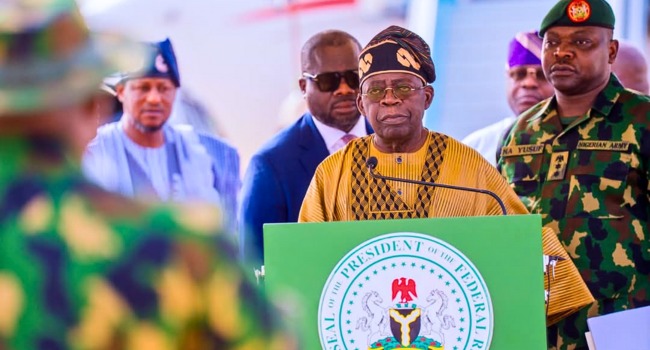
Abuja, Nigeria — President Bola Ahmed Tinubu, in a national address marking the second anniversary of his administration on May 29, 2025, reaffirmed his commitment to economic and social reform, calling on Nigerians to remain hopeful and resilient in the face of current hardships.
In a detailed review of his administration’s performance, Tinubu said the removal of fuel subsidies and unification of foreign exchange rates were painful but necessary steps to rescue Nigeria from economic collapse.
“We had to act decisively to avert a fiscal crisis, runaway inflation, and economic free-fall,” he stated.
Tinubu reported key economic improvements, including a drop in inflation, increased oil sector investments, and a narrowing fiscal deficit—from 5.4% in 2023 to 3.0% in 2024. He revealed Nigeria’s external reserves rose from $4 billion in 2023 to over $23 billion by the end of 2024.
He praised the impact of tax reforms, citing a rise in Nigeria’s tax-to-GDP ratio from 10% to 13.5%, reduction of multiple taxes, and protection of low-income households through VAT exemptions on essentials like food, rent, and public transport.
On national security, Tinubu acknowledged ongoing challenges but said significant ground had been recovered, especially in bandit-prone areas in the northwest, allowing displaced farmers to return to their land.
“Every Nigerian deserves to live without fear. We will remain vigilant,” he assured.
The President also highlighted milestones in health and education, including the revitalisation of over 1,000 Primary Health Centres and the expansion of health insurance coverage to 20 million Nigerians. He noted the introduction of a student loan scheme and broader access to tertiary education.
Reiterating his Renewed Hope Agenda, Tinubu said efforts to empower youth were taking shape through programs like Innovate Naija, Renewable Energy Parks, and MSME support. The National Agency for Science and Engineering Infrastructure (NASENI) was also spotlighted for its strides in industrial innovation.
Agricultural reforms, infrastructure upgrades, electricity expansion, and ongoing road projects across all regions were also listed as areas of achievement.
The president closed with a message of unity and hope, announcing Nigeria’s upcoming Motherland Festival aimed at showcasing the country’s cultural and creative assets, and deepening engagement with the diaspora.
“The worst is behind us. The future is bright. Together, we will build a stronger, more inclusive Nigeria,” he concluded.