
The Federal Government has announced plans to raise Nigeria’s tax-to-GDP ratio from under 10 per cent to at least 18 per cent within the next three years, marking a bold step in overhauling the country’s fiscal landscape.
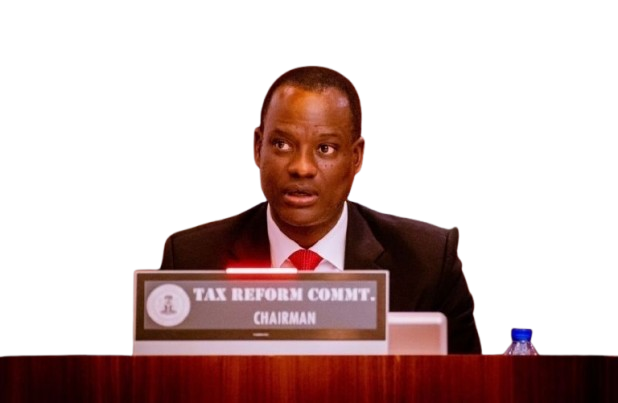
This ambitious target was revealed by Taiwo Oyedele, Chairman of the Presidential Committee on Fiscal Policy and Tax Reforms, during an appearance on Arise TV on Thursday. He said the target will be achieved through a series of newly enacted tax laws aimed at improving revenue collection, plugging leakages, and enhancing fairness in the system.
Oyedele said Nigeria’s current tax-to-GDP ratio—one of the lowest globally—pales in comparison to countries like South Africa, which boasts a 26 per cent ratio, and France at over 30 per cent.
“The tax yield is very embarrassing. Our analysis shows a tax gap of around 70 per cent. That means we’re not only failing to collect what we should, but we’re also inadvertently rewarding tax evaders,” he said.
To close that gap, he explained, the new legal framework includes stronger compliance mechanisms and simplified procedures that make tax evasion more difficult and paying taxes more convenient.
Sweeping Legal Overhaul
The legislative package comprises the Nigeria Tax Bill, the Tax Administration Bill, the Nigeria Revenue Service Establishment Bill, and the Joint Revenue Board Bill. These laws, recently signed by President Bola Tinubu, form the bedrock of the administration’s strategy to double tax revenue without imposing additional burdens on low-income earners.
One of the standout provisions is the exemption of Nigerians earning less than ₦1 million annually from paying personal income tax. “Previously, individuals earning as little as ₦300,000 were taxed at up to 7 per cent. That’s no longer the case,” Oyedele noted.
Small businesses with annual turnover under ₦50 million are also now exempt from company income tax, which remains at 30 per cent for larger enterprises. Furthermore, essential goods and services—such as food, healthcare, education, rent, and public transportation—are exempt from the 7.5 per cent Value Added Tax (VAT).
Rebuilding Trust Through Accountability
Beyond boosting government revenue, Oyedele stressed that the reforms aim to restore public trust in government by ensuring transparency and proper application of tax revenues.
“Our reforms are not just about collecting more taxes. They are also about demonstrating accountability. It’s almost like a reset of the social contract, so Nigeria can work for Nigerians,” he said.
Acknowledging that these reforms are long overdue, Oyedele commended President Tinubu for demonstrating political courage in the face of criticism.
“This reform should have been done 30 years ago. I give credit to the President—he stood firm, even when the backlash was intense. Some of the proposals were so tough, but he never turned back,” he added.
With the groundwork now laid, all eyes will be on the implementation phase, as the government pushes to meet its 18 per cent target while navigating a fragile economic environment and growing public scrutiny.