
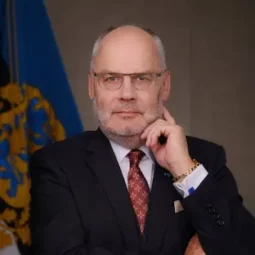
In a significant move aimed at addressing security concerns, Estonia’s President Alar Karis has signed into law a constitutional amendment that bans non-EU citizens from participating in local elections. The legislation, which was overwhelmingly passed by Estonian lawmakers on March 26, primarily targets the large Russian-speaking minority in the country. The ban is seen as a response to growing fears of Russian influence in the region since the full-scale invasion of Ukraine in 2022.
Aimed at Protecting National Unity
The amendment, which comes into effect immediately, is part of efforts to protect the unity of Estonian society, according to a statement from President Karis’s office. While the law specifically affects third-country nationals—primarily Russia’s ethnic minority living in Estonia—the president emphasized that the measure should not be seen as an exclusion from society. The statement clarified that the government does not view those impacted by the law solely as a security risk but was responding to concerns over national unity and external influence.
Impact on Russia’s Minority in Estonia
Estonia, a small Baltic nation that gained independence from the Soviet Union in 1991, has a notable Russian-speaking population, with an estimated 80,000 Russians living in the country. Permanent residents who are non-EU citizens were previously allowed to vote in local elections, but the new law revokes this right. While these residents have long been excluded from parliamentary elections, they had retained the ability to participate in local elections.
Many in Estonia view the Russian-speaking minority with suspicion, especially given the ongoing tensions between Russia and the West, including Estonia’s membership in the European Union (EU) and NATO, as well as its staunch support for Ukraine. The concerns around the influence of Russia’s minority communities have grown, with fears that Moscow could exploit these divisions to destabilize the country.
Historical Context
The roots of this issue date back to Estonia’s independence from the Soviet Union in the early 1990s. At that time, around a third of the population was Russian-speaking, including families who had migrated from other Soviet republics. However, many did not acquire Estonian citizenship due to the lack of family ties to the country and the language requirements for citizenship. Those who wanted citizenship were required to pass an Estonian language test, which further limited the number of Russian-speaking citizens.
Rising Tensions in the Baltics
This development is part of a broader trend of deteriorating relations between Russia and the Baltic States, including Latvia and Lithuania, which have seen their own challenges with Russian-speaking minorities. The three countries, united in their opposition to Russian aggression, have been deeply concerned about potential Russian attempts to exploit divisions within their societies.
Conclusion
The constitutional amendment has sparked mixed reactions both within and outside Estonia. While the government argues that it is essential to protect the country’s security and unity, critics contend that it may further alienate Estonia’s already marginalized Russian-speaking minority. The long-term impact of this decision remains to be seen, especially as the Baltic States continue to navigate the complex dynamics of Russian influence in the region.