
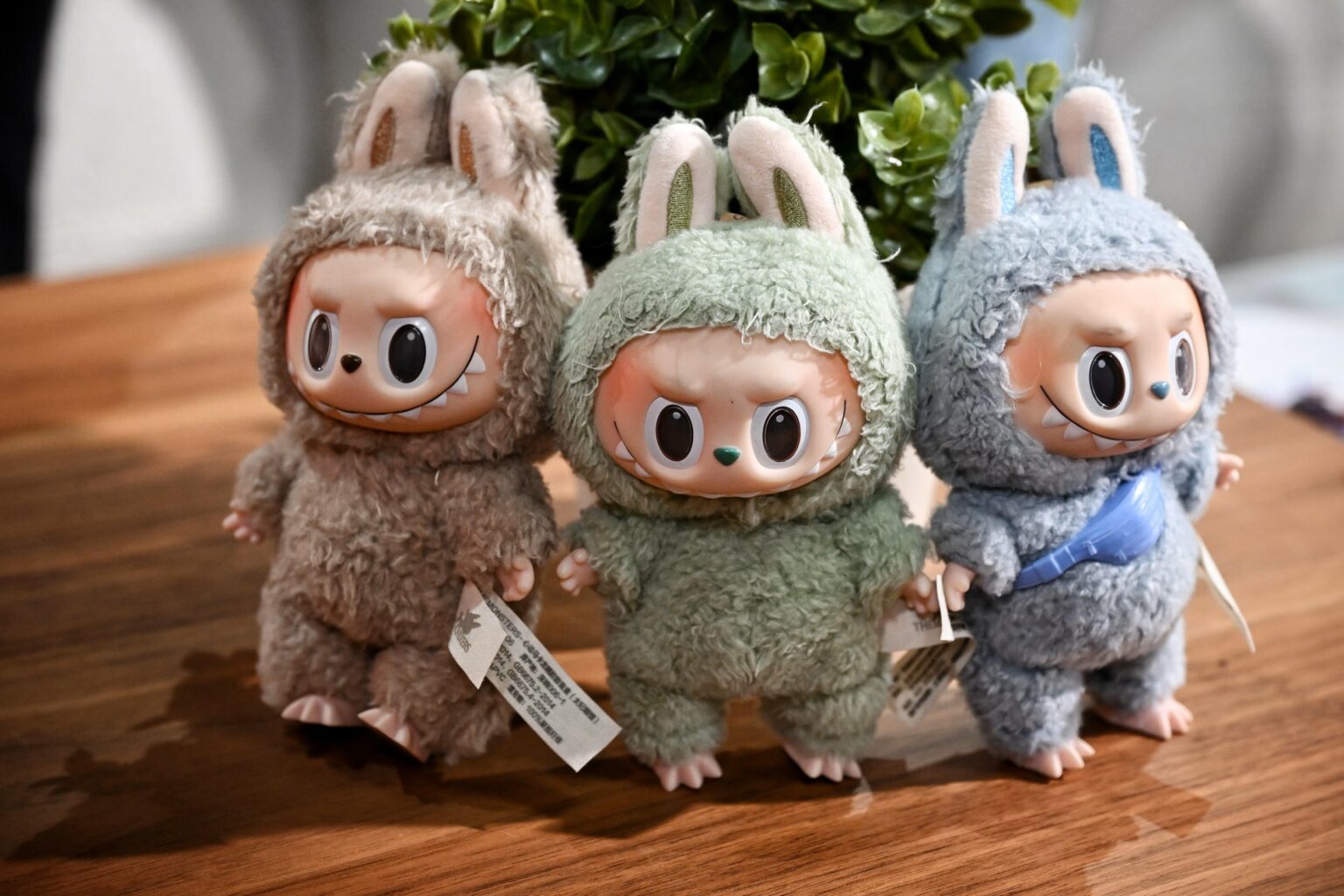
A dozen furry Labubu dolls dangled from a metal chain around the neck of toy enthusiast Maki Li, who proudly posed outside a Pop Mart store in central Beijing on Friday. The fanged figurines the latest craze from Chinese toymaker Pop Mart have become global style statements, spotted on the handbags of celebrities such as Rihanna and Dua Lipa.
On Thursday night, Pop Mart launched its newest edition: a palm-sized Labubu priced at about $11 each. The miniatures sold out almost instantly online, sparking a fresh wave of excitement among collectors.
Li, 32, was among the lucky few to secure a full box of 14. “I’m super happy right now,” he told AFP after unboxing them at a shopping mall Pop Mart store. “I’ll hang them in every possible place I can.”
The quirky characters, described by fans as “ugly-cute,” are sold in limited quantities, often through “blind boxes” that keep buyers guessing which model they’ll get. The thrill of discovery has fueled a frenzy in China and beyond, with collectors sometimes queuing overnight or spending hundreds of dollars to complete sets.
Outside the buzzing store, mother Li Jianuo smiled as she filmed her two children tearing into their blind boxes. She admitted spending over 1,000 yuan ($140) on multiple Labubus as a back-to-school gift.
“It’s so cute!” her 12-year-old daughter exclaimed as she revealed a doll with white ears.
“I wanted to fulfil my children’s wishes. They really like it,” Li said, adding that she planned to keep the toys even if her kids grew out of them. “When they grow up, they will be able to look back at how we scrambled to get it. I think it’s important to have that memory preserved.”
The Labubu craze has become so influential that it has even been referenced by Chinese officials. Last month, Commerce Minister Wang Wentao highlighted the dolls as examples of “new forms of consumption” that could help revive China’s sluggish economy.
For 27-year-old Zhang Jiaru, who bought both mini and larger Labubus, the appeal lies in their playful, unconventional design. “It’s about paying for your own interests, right? It makes you happy,” she said.
Meanwhile, Li compared the toy obsession to a shift in consumer habits during tough economic times. “People can’t afford the big-ticket items anymore they can’t buy Balenciaga, so they buy Pop Mart instead,” he said.
Wearing his newly purchased collection, Li described the dolls as a source of comfort. “They can keep you company for a long time,” he said, smiling.