

By Gabriel Adeyeye – Senior Digital Marketer & Customer Acquisition Expert
In today’s attention economy, where consumers are bombarded with hundreds of messages before breakfast, one question echoes loudly in marketing circles: Does the age-old “Rule of 7” still hold true?
The Rule of 7 is one of marketing’s oldest principles: a potential customer must encounter your message at least seven times before taking action. This made sense in the analogue era of television, radio, and print, when brand messages were scarce and attention spans longer. But in our hyperconnected digital world, the customer journey is anything but linear.
The Rise (and Limits) of the Rule of 7
Traditionally, marketers executed the Rule of 7 through repeated messages across a handful of predictable channels, TV commercials, radio jingles, print ads, and billboards. The goal was simple: build familiarity, foster trust, and drive conversion.
Why does repetition work? It’s due to a psychological phenomenon called the mere-exposure effect, first studied by psychologist Robert Zajonc in 1968. This effect shows that people tend to develop a preference for things they see repeatedly even if they don’t consciously remember the exposure.
This principle translates into marketing trust: the more a consumer sees a brand, the more trustworthy and appealing it becomes. However, today’s consumer environment is drastically different. A typical Nigerian consumer might encounter your brand on Instagram, watch a YouTube explainer, receive a WhatsApp broadcast, and scroll past a Google ad—all in one day, yet still hesitate to buy. Why? Because they’re not just seeking repetition; they want value.
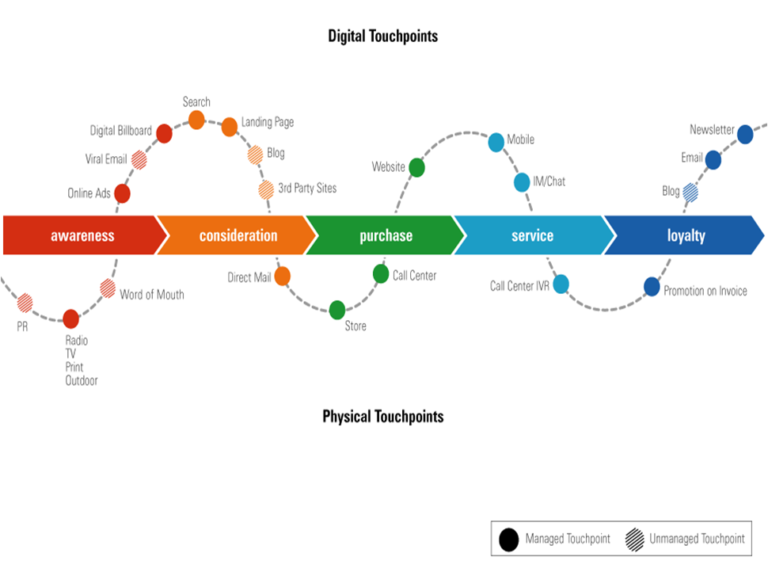
Recent studies show that it now takes between 8 and 50 touchpoints depending on product complexity, audience sophistication, and channel mix—before a sale happens. The journey has become longer, more complex, and emotional.
The New Reality: When Seven Becomes Seventy
Modern customer acquisition isn’t about showing up more; it’s about showing up better. Top brands focus on delivering the right message, to the right person, at the right time, and through the right channel. This shift demands evolving from the Rule of 7 to what I call the Rule of Relevance built on three pillars:
The Rule of Relevance is built on three pillars:
Context: Is the message appropriate for the customer’s current situation? For example, a fintech app notification about investments isn’t helpful for someone struggling with basic budgeting.
Timing: Is your message aligned with the customer’s decision stage? One perfectly timed message can outweigh seven poorly timed ones.
Value: Does your content solve a problem, answer a question, or inspire trust? Empty brand messaging won’t cut it, especially with discerning millennials and Gen Z.
Failing any of these pillars means frequency alone won’t drive conversion.
The New 7 Marketing Touchpoints in a Mobile-First World
A modern consumer’s journey might follow seven distinct stages—not seven exposures:
Awareness (Who Are You?)-The customer discovers your brand through social media, influencers, paid ads, search engines, or offline triggers like word-of-mouth. The goal is to capture attention and establish presence.
Interest-The customer engages by clicking ads, visiting your website, or following your channels. Curiosity grows, but skepticism remains. Nurture their interest with relevant and valuable content.
Consideration- They compare your offering against competitors, looking at price, features, quality, and brand values. Highlight your unique selling points and address objections clearly.
Validation-Social proof matters here. Buyers seek testimonials, influencer reviews, user-generated content, or personal recommendations to confirm their choice.
Trust-Trust builds over time through consistent branding, quality communication, responsive customer care, and alignment with customer values. This emotional connection is critical.
Intent-The buyer shows intent by signing up for newsletters, adding products to cart, or asking questions. This stage demands attentive support to guide them forward.
Conversion-The final step: purchase, subscription, or booking. Make this process smooth, secure, and satisfying—while laying the foundation for retention and advocacy.
This journey can span days, weeks, or months, influenced by factors such as internet access, data costs, and reliance on social proof. Brands must meet customers wherever they are, whenever they’re ready with relevant content, timely support, and meaningful engagement.
Conclusion: Evolution, Not Revolution
The Rule of 7 isn’t dead; it’s evolving. In Nigeria’s digital marketplace, successful brands won’t be those that simply increase touchpoint frequency. They’ll be those that master relevance delivering the right message, at the right time, through the right channel.
The future belongs to brands that understand that in a world of infinite touchpoints, relevance is the ultimate differentiator. The question isn’t whether customers have seen your brand seven times; it’s whether those interactions created meaningful relationships that drive conversion and advocacy.
As Nigerian marketers, our challenge is to evolve the Rule of 7 into a framework that recognises the complexity and sophistication of modern consumers. The Rule of Relevance isn’t just the future of customer acquisition—it’s the present reality for brands that want to thrive in our interconnected world.