
Amid growing legal and political tension, the Federal Government is preparing its defense against a landmark lawsuit filed by 11 governors from the opposition People’s Democratic Party (PDP), challenging President Bola Tinubu’s declaration of a state of emergency in Rivers State and the suspension of Governor Siminalayi Fubara.
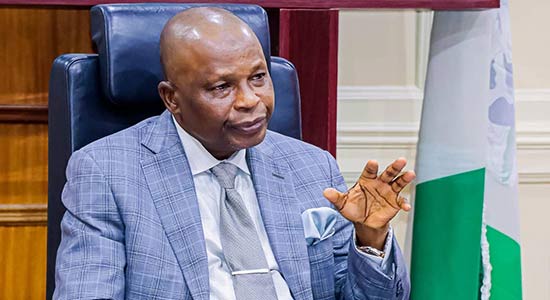
Attorney General of the Federation and Minister of Justice, Lateef Fagbemi (SAN), is reportedly leading the effort to draft the President’s response to the PDP governors’ suit before the Supreme Court. The suit questions the constitutionality of suspending an elected governor and replacing him with a presidential appointee.
The governors are contesting the legality of Tinubu’s March 18, 2025, proclamation, which suspended Fubara, his deputy Ngozi Odu, and all members of the Rivers State House of Assembly for six months. Retired Vice Admiral Ibok Ete Ibas was appointed as sole administrator to run the state’s affairs in the interim—a move the opposition has decried as unconstitutional and undemocratic.
The suit, marked SC/CV/329/2025, hinges on key constitutional interpretations around the President’s emergency powers and federalism principles. The plaintiffs argue that Tinubu’s actions contravene Sections 1(2), 5(2), 11(2)(3), 176, 180, 188, and 305 of the 1999 Constitution.
Legal Firepower
To prosecute the case, the PDP governors have assembled a formidable legal team of seven Senior Advocates of Nigeria (SANs), including Bolaji Ayorinde, Eyitayo Jegede, and Kamaldeen Ajibade, alongside six other experienced legal minds.
A separate but related challenge has been filed at the Federal High Court in Port Harcourt by ex-lawmaker Farah Dagogo, with a substantive hearing scheduled for May 12. The court has approved substituted service on top government officials, including the President and National Assembly leaders.
National Assembly Moves
Meanwhile, the House of Representatives is set to inaugurate an ad-hoc committee tasked with taking over the legislative functions of the Rivers State Assembly under the emergency rule. Spokesman Akin Rotimi noted that the emergency proclamation was “amended to reinforce democratic safeguards,” shifting oversight from the Federal Executive Council to the National Assembly.
The 19-member committee will be chaired by House Leader Prof. Julius Ihonvbere, with Minority Whip serving as deputy chair. The move underscores the federal legislature’s expanding role in managing the political fallout in Rivers.
Political Voices Weigh In
Former Bayelsa State governor and PDP Senator Seriake Dickson visited Fubara in Port Harcourt, applauding his restraint during the political crisis. He called on the Ijaw nation to maintain peace and resist provocations, emphasizing that strategic national assets should not be targets of retaliation.
Militant-turned-security contractor Government Ekpemupolo, popularly known as Tompolo, also broke his silence at his birthday celebration, assuring that Fubara would return as governor. “Talks are ongoing,” he said, adding that both Fubara and his estranged political godfather, Minister Nyesom Wike, must reconcile.
“Wike is angry,” Tompolo said, “but he has to bring his temper down for the good of all… I assure you that Governor Fubara will return as Governor.”
While urging continued support for President Tinubu, Tompolo also issued a stern warning about Bayelsa, the heartland of the Ijaw nation: “If you try Bayelsa, you will die.”
Analysis:
The unfolding situation in Rivers State represents a constitutional test case with far-reaching implications for Nigeria’s federal structure and the limits of presidential emergency powers. It also underscores the intersection of legal, political, and regional dynamics, particularly in the volatile Niger Delta.
The Supreme Court’s eventual ruling will likely redefine the balance of power between Abuja and the states and could shape emergency governance protocols for years to come.
Would you like a more concise summary version or a sidebar for key players and timelines?